High-Touch Customer Service: Real Examples and Working Strategies
Discover key strategies and real-life tips to make every interaction count with high-touch customer service.
Written by Mariia Yuskevych

Imagine opening a birthday gift, and it’s exactly what you wanted. That coffee table book you’ve been eyeing for months, or a piece of merch from your favorite movie.
That warm feeling of “Wow, how did you know!” is amazing, right? Well, you can bring the same experience to your customers.
High-touch customer service helps you achieve exactly that “Wow” effect with a personalized, thoughtful customer experience.
In this article, I will explain what does high-touch customer service mean, share some strategies on how to deliver it, and sprinkle a few pro tips on implementing this approach. Let’s begin!
What is high-touch customer service?
Let’s start from the very beginning. Well, not the very beginning, but actually ask “What is high-touch customer service?”
High-touch customer service is a hands-on, personalized customer engagement model. In other words, it is one-to-one, individualized interactions when one client is in the spotlight.
Think of the word “touch” as contact. In high-touch customer service, there is a lot of direct, personal contact.
Among the core characteristics of the high-touch customer service experience are
- High level of personalization
- Human-to-human interaction
- Customized solutions
- Deep understanding of customer needs
- Proactive communication from your side
High-touch customer service is often implemented with higher-value, complex customers where an automated response doesn’t cut it.
High-touch vs low-touch service difference
If there is high-touch customer service, you guessed it, the low-touch customer success model must exist.
In all seriousness, low-touch customer service is often synonymous with automated support.
In most cases, low-touch customer service is used for routine, high-frequency tasks when there is no need to involve agents. Customers can mostly help themselves with standard procedures using various existing tools.
High-touch customer service examples
I bet you stumbled upon many cases of high-touch customer service. Maybe you are even providing some of these services, unaware that it is, in fact, a high-touch service.
High-touch service examples include:
- Face-to-face meetings with clients
- Live human-to-human support (in chats, emails, or calls)
- Personal product demos and tutorials
- Dedicated customer success managers
- Individual discounts and promotions
- Custom materials (e.g., a knowledge base)
- Personalized onboarding
- Regular check-ins and follow-ups
- Access to closed chats, forums, beta-testing, etc
- Individual growth strategies for businesses
Low-touch service examples
A low-touch customer experience is all about the automation of simple, routine requests. The ways to do so include
- Chatbots with a predefined conversation flow
- Automated emails (e.g., reservation confirmations, reminders, etc.)
- Set notifications
- FAQs, knowledge bases, guides, blogs, etc.
- Prerecorded demos and training
Usually, low-touch customer service doesn’t involve direct interaction with the customer success team or only offers the front-line support when requested (like chat or email).
High-touch customer service: benefits and challenges
High-touch customer service is in no means a must for any company, but it does bring great benefits both to your business and customers.
Top benefits of high-touch customer support
Delivering high-touch customer service means:
- Earning customer loyalty: A personalized, attentive service shows customers how much you value them and encourages them to stay with you long-term. Consider this: brands that do personalization well are 71% more likely to see a boost in customer loyalty and higher customer retention.
- Getting brand advocates: Believe me, above-average customer service never goes unnoticed. If you consistently go the extra mile, your customers will bring up your product or service when someone needs a recommendation. Wouldn’t you give a shoutout to a business that does more than expected?
- Increasing customer lifetime value: High-value customers often become repeat buyers willing to splurge on your product or service. About 80% of companies say customers spend more, roughly 38% extra on average, when the experience feels personalized.
- Gaining competitive advantage: The competitive advantage doesn’t always go down to offering the lowest price. On the opposite, people stay with brands that offer exceptional value even when their prices go up. Because knowing you’ll get support every step of the way can matter more than saving a few bucks.
These are good enough reasons to at least consider offering that top-of-the-top customer service, aren’t they?
High-touch customer support challenges you should know
Like most things in life, the high-touch model is not all pros and comes with certain drawbacks (sad sigh). Forewarned means forearmed, they say, so here are some challenges you should be aware of:
- Resource heaviness: As compared to low-touch customer support, high-touch has a higher cost per customer. Assigning dedicated customer success managers, conducting one-to-one demos, writing personalized materials – all these activities require a decent amount of time and involvement.
- It’s harder to scale: High-touch customer support is very much doable with a smaller number of customers. As the customer base grows, it can become difficult to maintain the same level of customer relationships and attend to them with the same amount of attention.
- Data privacy concerns: Using customer data to personalize service for them is a thin ice. You need to be sure that you are not using any data without consent.
If you are mindful of these challenges and prepared to overcome them (I will share some tips on that a bit later on), high-touch customer service with all its benefits is well worth adding to your digital engagement strategy.
How to deliver a high-touch customer experience? 7 working strategies
Implementing a high-touch customer service model means precise, systematic actions.
Here are 7 strategies to apply for consistent and effective high-touch service:
Personalization, personalization, personalization
If there is only one word to say about a high-touch customer success model, it’s definitely personalization.
Bad news: you will have to go beyond just using the name at the beginning of an email (no shade to doing so, but even automated mailing systems can do it, so this approach is slowly moving in the low-touch service direction).
Good news: it’s not all too hard to customize your interactions. What exactly can you do? You might regularly share materials tailored to a client’s setup, industry, and current goals. It can also be individual meet-ups, custom growth strategies, you name it.
Say your customer success manager might notice that a customer logged in to the system and is not actually using it. Go ahead and ask what’s the bottleneck, and offer a product walkthrough.
Personalization comes in many shapes and sizes, and it solely depends on your customer success strategy and resources on how to deliver it.
Don’t put all your customers in one basket
Here’s the deal: most likely, you can’t provide high-touch service to every single customer you have and, in all honesty, you shouldn’t.
Firstly, some of them simply don’t need a personalized approach. Some consumers prefer to quickly set up their account and start using the platform without a 1-1 onboarding meeting.
Secondly, giving high-touch service to all of them would stretch your customer service team (and your budget) way too thin.
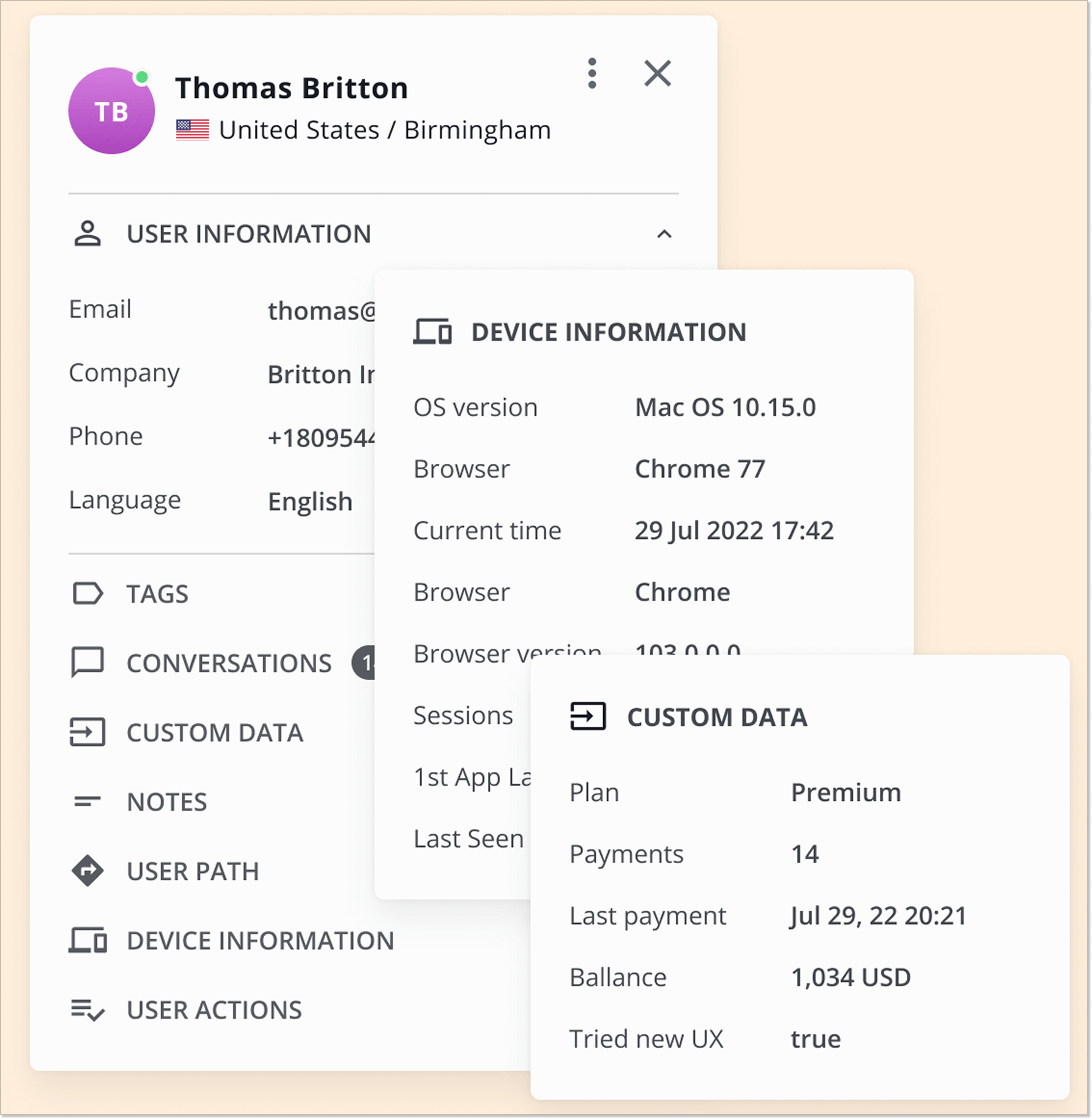
The answer is customer segmentation. Start by defining your high-value customers. These can be the enterprise accounts, customers with an annual or premium subscription, those with complex processes, and so on. You might review the lifetime value of customers and select the ones with high numbers.
Additionally, to provide more spot-on service, you can divide your customers into groups based on their team sizes, goals with your product, industries, etc. And, yes, go ahead and use this information later on to customize your interactions.
Remember that your CRM or customer service tools are a gold mine of data for high-touch customer service.
Customize the onboarding
Often, the first touchpoint in most product interactions is the onboarding process.
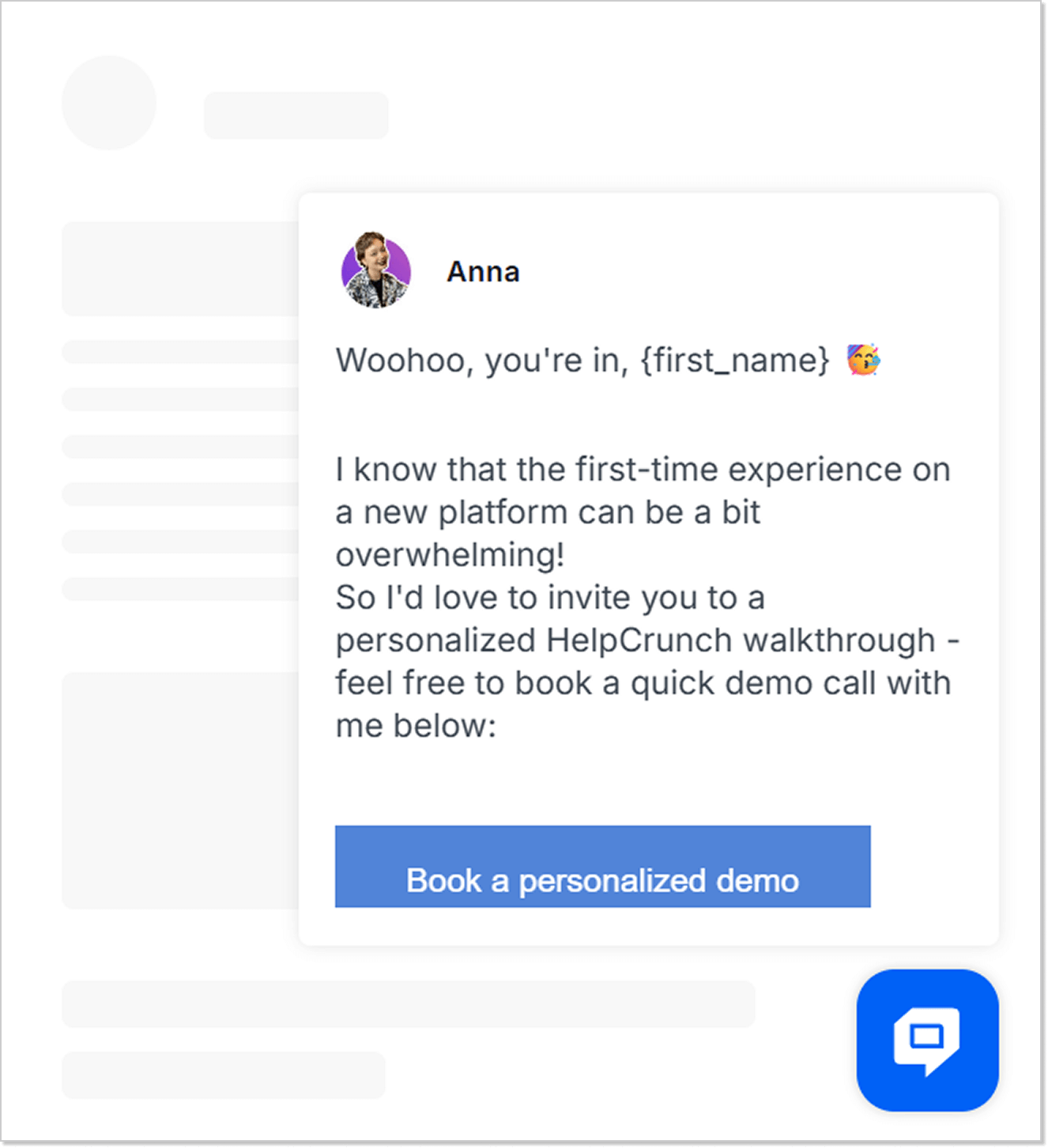
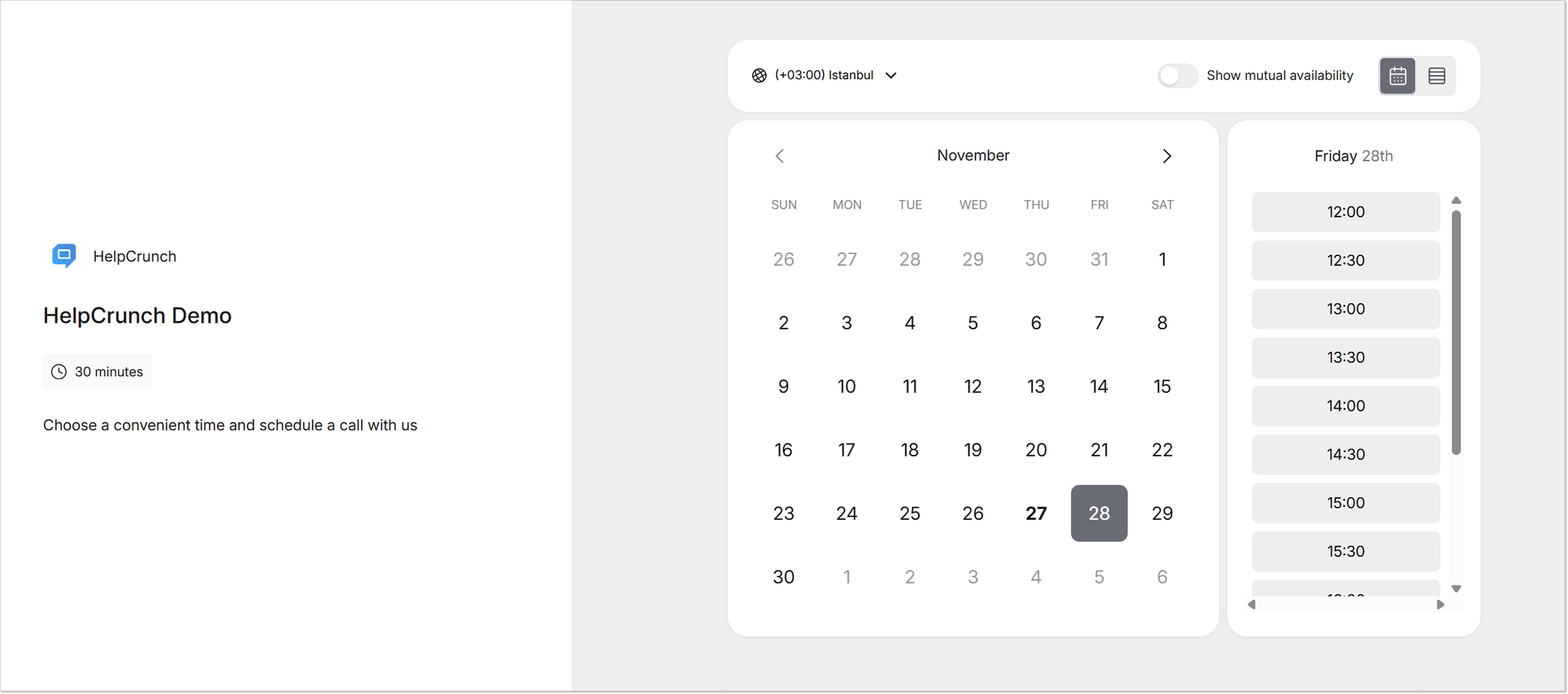
If you are going with a high-touch service, it’s time to make the onboarding unique for each customer. Swap the generic welcome email for an individual, warm one. Invite your customer into a call in case they need help using the product.
Assign dedicated customer success managers
A person who your customer will interact with directly matters a lot. When it comes to high-touch customer service, it’s best to assign a dedicated customer success manager to each client.
A dedicated CSM can form a deeper relationship with a customer and become their representative in your company. A customer can reach them with any question, suggestion, or need.
Be proactive and reach out first
Don’t wait until something goes south and your first contact with the customer is an issue resolution. Instead, reach out and start the interactions on a positive note.
You can get in contact with follow-ups, promotions, personalized discounts, or useful materials. Say, you wrote an e-book and think it can be interesting for the customer. Why not offer to send it over?

Gather the praise and complaints
Building your customer engagement strategy solely on a gut feeling is rarely a good idea. A great source of learning on how the high-touch customer service is going is asking the customers themselves.
As you are to provide highly personalized, custom interactions, it only makes sense to gather feedback and ask if there is anything a particular customer would like to change or sees lacking in their experience.
Your customer success team can introduce regular feedback loops in the form of recurring survey forms, or simply ask a customer a few questions at the end of their interactions. It’s also useful to encourage customer feedback by including a short prompt at the end of your materials or interactions with the customer success manager.
Throw in a little extra
High-touch engagement is always about going the extra mile and offering more than expected.
Some ways you can deliver that extra bonus include
- dedicated events for clients (online or in-person)
- exclusive webinars or company-focused sessions
- access to beta testing or early feature releases before they go public
- fast track, quality support
- premium service options
The goal here is to present the VIP, premium feeling to the service and make the customer feel like they are interacting not with a faceless company but with specific people. High-touch engagement becomes especially important in complex, creative industries. Selfnamed, which works with emerging beauty brands, notes that even when hands-on guidance and strategic support are standard, clients still often perceive it as premium or “extra” service.
3 tips for implementing a high-touch customer engagement model
As I promised, here are some tips on how to introduce high-touch customer service and make your customer a bit closer to you:
Implement a hybrid model
Most companies, especially those offering digital products, such as SaaS, rely on a hybrid customer service model and combine both low-touch and high-touch strategies.
It is difficult and, in all fairness, needless to provide high-touch support only. What most companies do is offering high-touch interactions only for more complex tasks or with a specific tier of customer.
For example, we at HelpCrunch combine two models as well: customers can access FAQs and knowledge bases at all times, but when needed, we offer one-to-one demos and live chats.
For starters, you might choose a small segment of customers to try out high-touch service with assigned customer success managers.
Rely on tech for automation
Low-touch service rarely requires live interactions, so automate what you can! For instance, you can set up a widget or an AI agent on your website, so customers can get their questions sorted in a few minutes.
Plus, who says you have to do all high-touch work manually? Automation is your best friend here, too, as you can make your interactions both personalized and efficient.
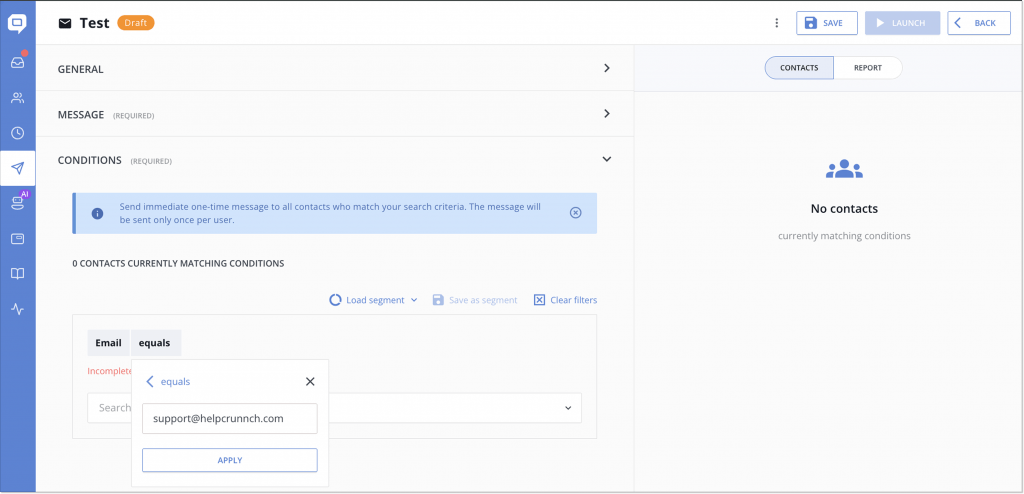
One example is the manual messaging feature in the HelpCrunch customer support platform. You can select the conditions to segment your audience (say, only premium subscribers) and send out unique offers only to this customer group. By the way, you can try it out for free.
Introduce internal training and guidelines
When bringing high-touch engagement to your flow, make it clear to the customer success team what and how exactly they are supposed to do at every stage of the customer journey. You can organize a short online training or write guidelines for them to understand how to interact with customers profiled as high-touch.
You may define a few strategies to introduce, say, offering personal discounts and free consultations. Assign team members for each customer and discuss in which format the interactions should take place.
Wrapping it up
High-touch customer service is an amazing way to present your clients with that “They know exactly what I need” feeling. Everybody loves pleasant surprises, isn’t that true?
High-touch support is all about meaningful, mindful interactions that show the customers that you actually care about their experience and are ready to assist with any issue. With an organized, mindful approach, you can deliver that top-class care without over-the-top spending.