Chatbot vs. Conversational AI: Difference, Types, Examples
Are chatbots and conversational AI the same? Great question! Not really, but in some cases they actually are. Intrigued? Let’s explore.
Written by Mariia Yuskevych

I bet you are running into bots all the time. Let’s confess it: sometimes it’s even hard to realize that you are actually having a full-on conversation with a robot.
It’s the hard facts: many businesses are already assigning customer support tasks to little non-human helpers. And, chances are, you ended up on this page because you are exploring getting some intelligent help for yourself.
I know, there are a lot of different terms used for artificial intelligence-based assistance, and it all gets confusing rather quickly. For starters, what’s the difference between chatbots vs. conversational AI?
I am here to help find out exactly that. Trust me, by the end of this article, you will know the difference between chatbots vs. conversational AI, how to use each of the technologies, and more!
What’s the difference between a chatbot vs. conversational AI?
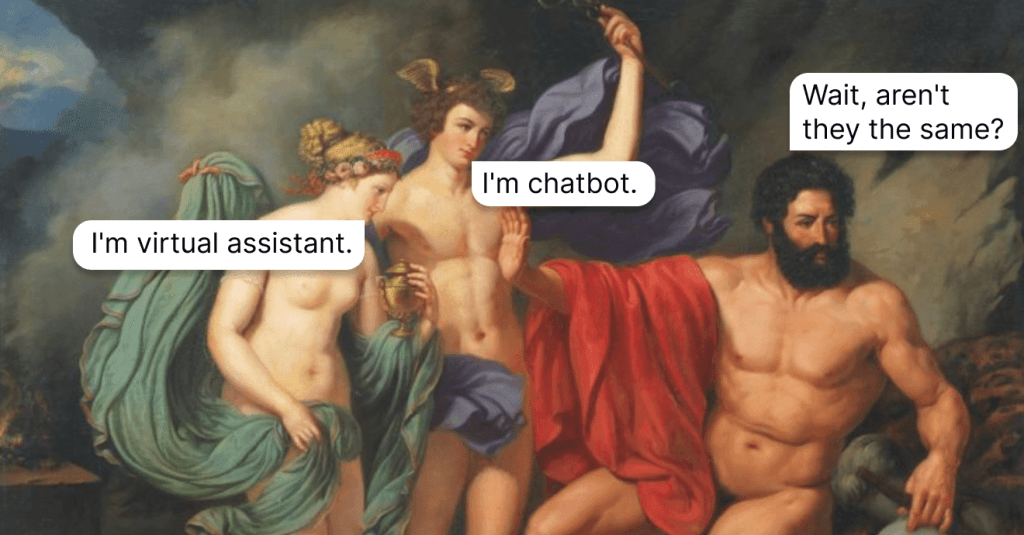
A chatbot is a type or a use example of conversational AI. Yes, these are not two separate technologies, but a chatbot is simply one way of how conversational AI can work.
Conversational AI is a much broader term that, apart from chatbots, includes other tools, like virtual assistants.
At the same time, not all chatbots are a type of conversational AI. Yes, I know, a bit confusing. I will explain more later, but for now, remember that only AI chatbots are a type of conversational AI. So, an AI chatbot is both a conversational AI example and, well, a chatbot example.
What is a chatbot?
Let’s now dive a bit deeper, because surprise-surprise: there are actually two main chatbot types.
A chatbot is a program that simulates realistic, human-like conversations through messaging or voice interactions.
As I mentioned, there are two types of chatbots: rule-based and AI chatbots, that function in quite different ways.
Rule-based chatbots
These are quite simple. They follow a predefined set of rules or conversation flow and don’t really step away from those.
You might have seen the traditional bots with set options to choose from. These are also called decision-tree or menu-based bots. Such basic chatbots follow an “if-then” logic and guide users through fixed paths rather than understand open-ended questions.
Users are simply clicking on a certain option (Say, “ Refunds and returns”) and then the bot shows all the sub-questions for this category until it goes down to an answer.
Alternatively, rule-based chatbots can request some information from a user, such as an order number or account type, and then provide a response based on that input.
AI chatbots
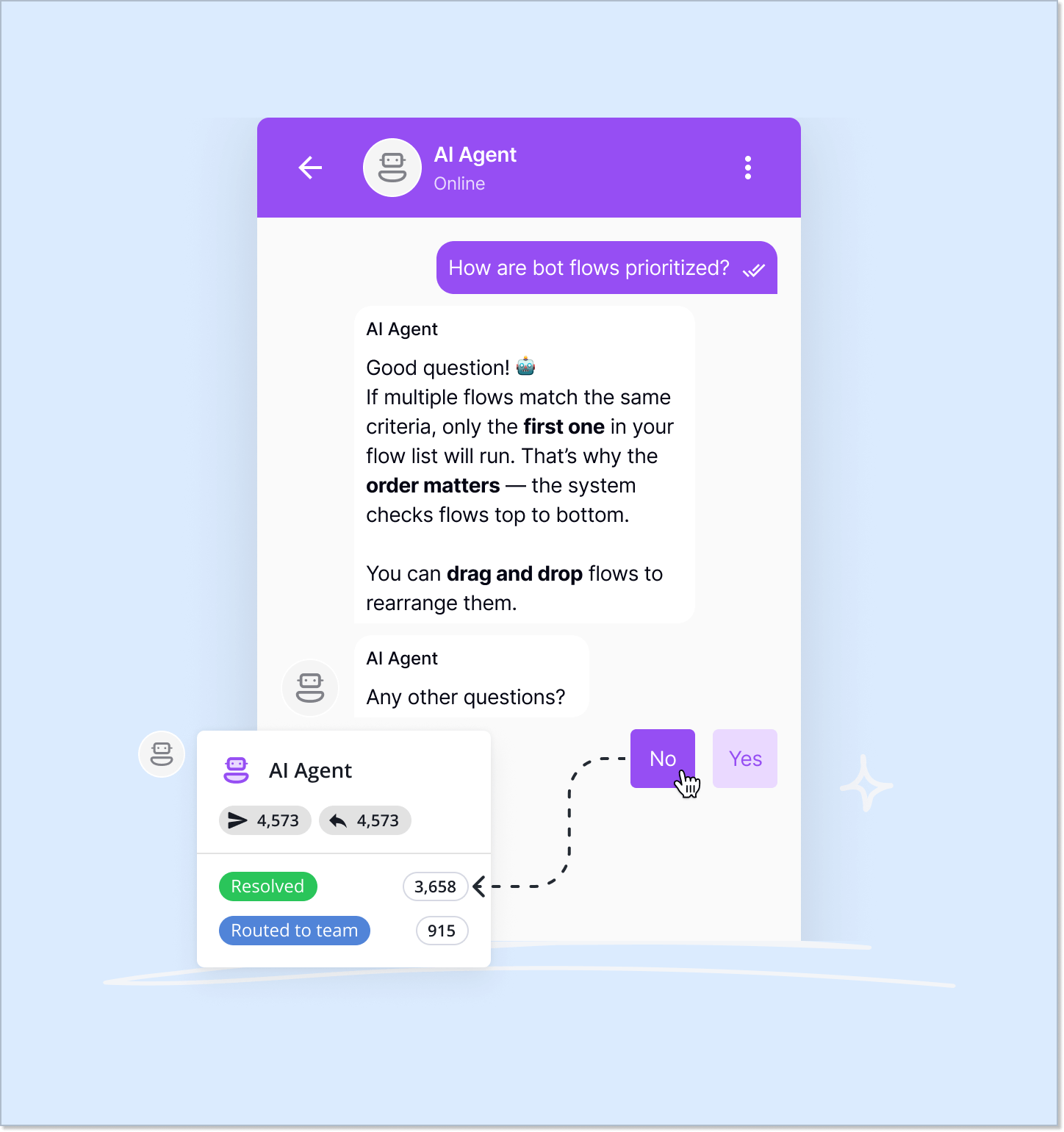
This is where things get interesting. These smart chatbots can recognize certain words in the messages, conduct sentiment analysis, and respond in a natural, human language.
AI chatbots have the capabilities of natural language understanding, context awareness, and tailoring their responses to a particular conversation scenario.
What’s more, the smarter ones (yes, that is a wordplay from my side) can even memorize the previous conversations and then reuse the information to give more spot-on assistance.
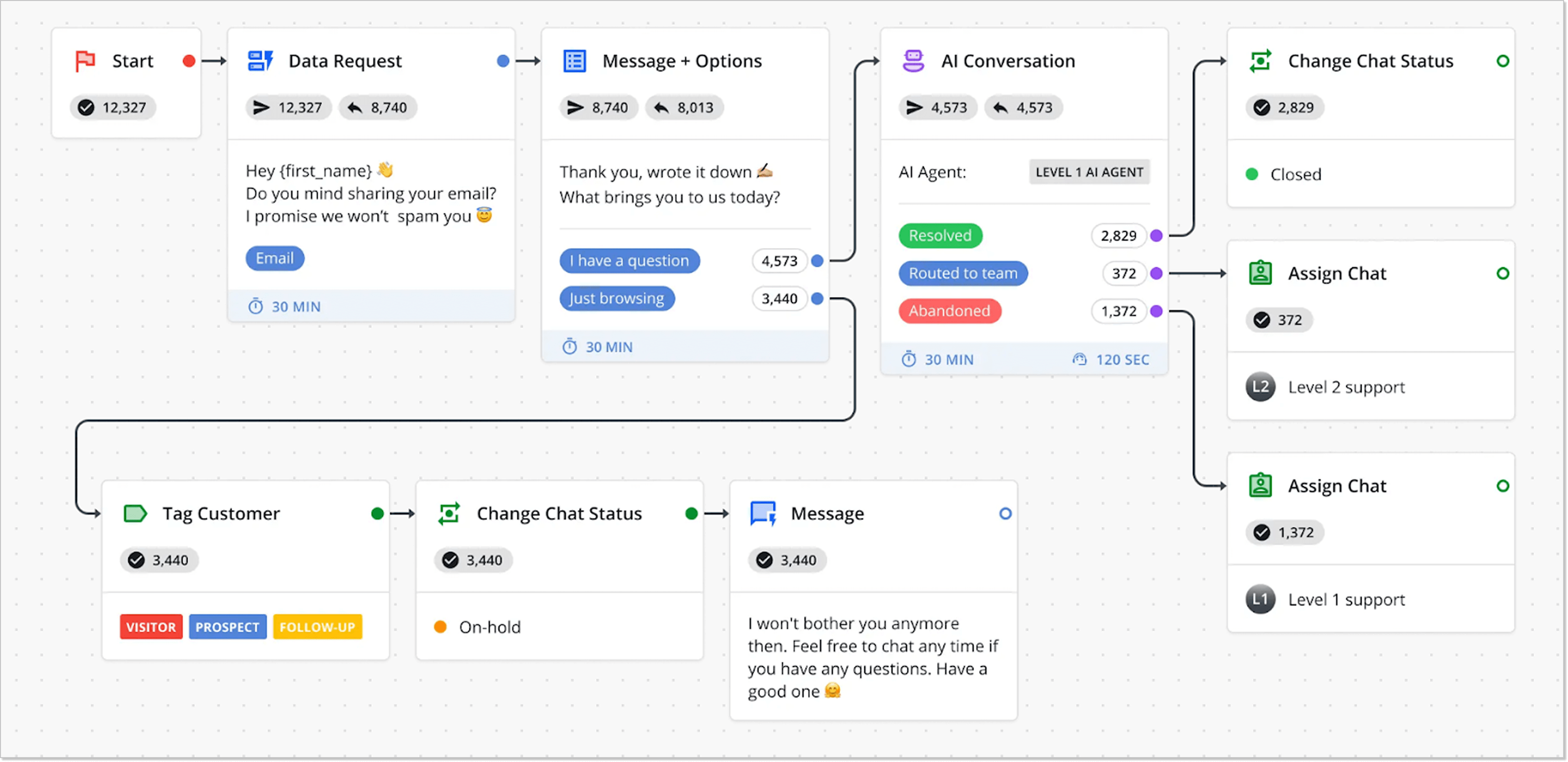
AI chatbots are an example of conversational AI solutions. Speaking of which, let’s move on to the question of what conversational AI is.
What is conversational AI?
Conversational AI is a technology that allows machines to understand human language and respond naturally. It’s not a single product but a technology that powers chatbots, assistants, and other smart interfaces.
Conversational AI simulates real, person-to-person communication. In other words, it’s how machines can talk to humans in a natural way.
The goal of conversational AI is to make the interaction with the robot seem as natural as possible. In the best case, a user might not even realize they’re talking to a bot and still get their request sorted out.
So, how does it all work, or what powers the conversational AI? The core technologies behind conversational AI are natural language processing (NLP), speech recognition, and machine learning (ML).
Types of conversational AI
As you see, conversational AI is a much broader term than chatbots. It includes all the tools that simulate human interaction.
To be precise, some of the most common examples of conversational AI include
- AI chatbots (text-based conversations)
- AI agents (text-based conversations)
- voice assistants like Alexa or Siri (voice-based conversations)
- conversational apps (can be text-based, voice-based, or even combine both!)
When talking about chatbots and conversational AI, remember that not all chatbots rely on this technology. Rule-based, traditional chatbots have nothing to do with it, while AI chatbots are a direct example of conversational AI.
Rule-based chatbot vs. AI chatbot: factors to consider for your business
So, now that we have cleared up all the terms, let’s discuss the practical side of the chatbot vs. conversational AI differences: which one should you go for in your business? Or, maybe, you should even use both? Let me explain.
Excuse me if it sounds very cliché, but the choice of rule-based vs. AI chatbot solutions comes down to your particular customer service needs.
Go for rule-based chatbots if you need:
- Straightforward answers to simple, run-of-the-mill inquiries
- Automated data processing for customer service or sales needs
- Self-service with redirection to the knowledge base or other resources
- A cost-effective solution for the first line of support
You will need an AI chatbot if you are looking for:
- Responses to more complex customer questions
- Handling multi-step customer service situations, like returns and refunds
- Feeling of a real support agent chatting with customers
- Context awareness and specific tone of voice
- Integration with your custom data sources
- Memorization of previous chats and constant improvement of AI customer service
Here’s the thing: in real life, customer inquiries rarely fit into just one category. Sometimes your customers only need a quick answer like “What is your pricing?” and other times they come with more complex requests that require context and flexibility.
That’s why combining both approaches often works best. Rule-based chatbots handle simple, repetitive questions, while AI chatbots step in when the conversation gets more nuanced.
Imagine a client who wants to extend their subscription. Their first step is clicking a “Subscription” section in the chatbot, which immediately redirects a user to a relevant help article for quick self-service. If the answer isn’t there, the customer continues explaining their situation, and the artificial intelligence takes over, understands the context, and offers suggestions that fit their more complicated case that falls outside the usual conversation flow.
Chatbots vs. conversational AI: applications in customer service
Now, I invite you to explore some examples of both rule-based chatbots and conversational AI. Nothing better than seeing how things actually work in real life, right? Maybe some of these examples will inspire you to get a smart helper of your own, be it a rule-based chatbot or an AI assistant.
Rule-based chatbot examples in customer service
Rule-based chatbots follow a simple logic: if this, then that. They don’t try to be clever, and that’s exactly why they work so well for everyday tasks.
Self-service customer support
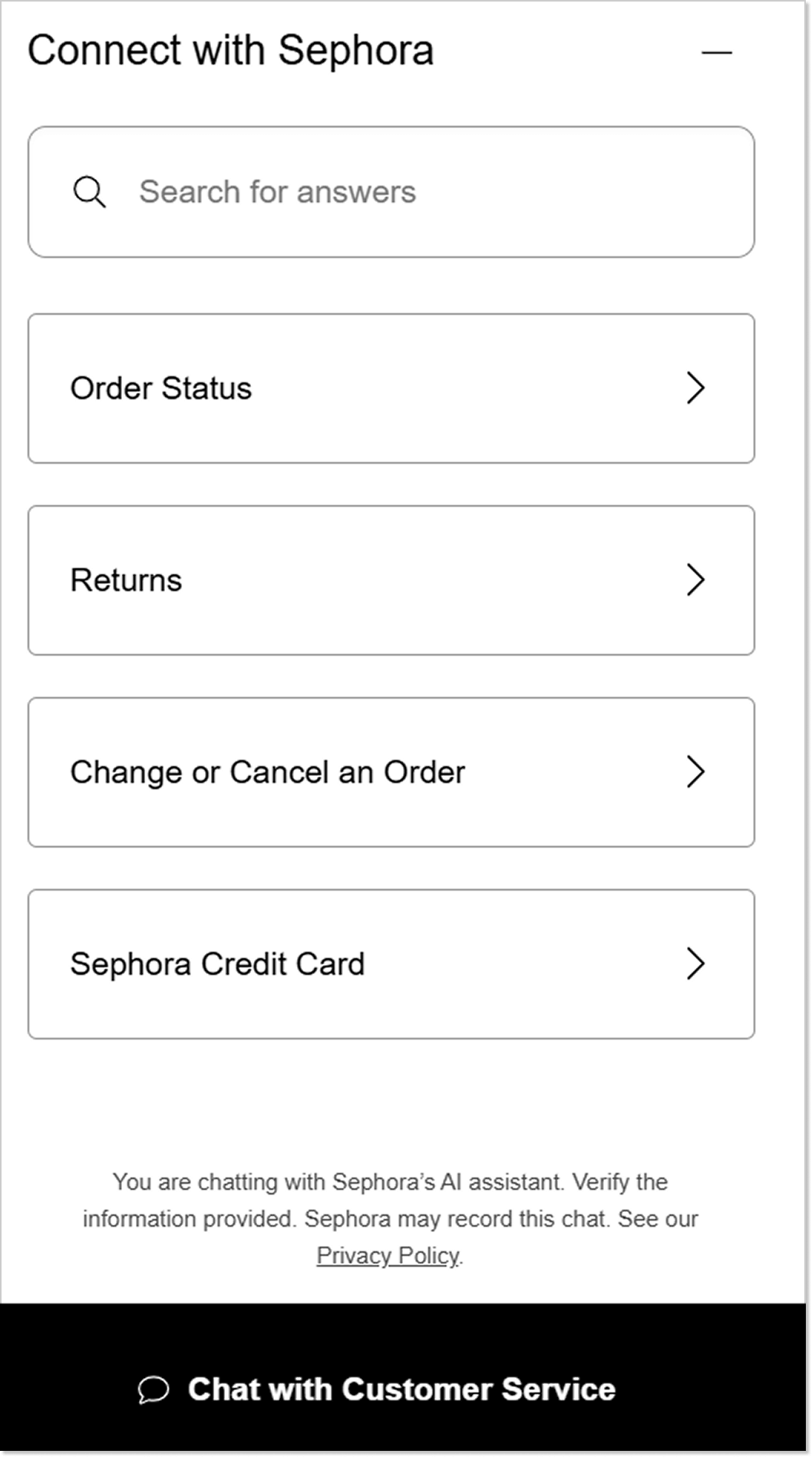
A classic example is self-service support, like the one you see on many ecommerce websites. Take Sephora’s help widget. Instead of asking users to type long explanations, the bot shows clear options like “Order status,” “Returns,” or “Change or cancel an order.” You click, the bot follows a predefined path, and you quickly get the right article or instructions. A straightforward road to customer satisfaction.
FAQs
Another common use case is FAQ handling. Questions like “Where is my order?”, “How do I reset my password?” or “What are your working hours?” don’t need AI-level reasoning.
A rule-based bot can instantly show the correct answer or redirect users to a relevant knowledge base article without hassle. Let’s be honest, if the question is that simple, clicking a button beats typing a heartfelt message every time.
Gathering basic customer data
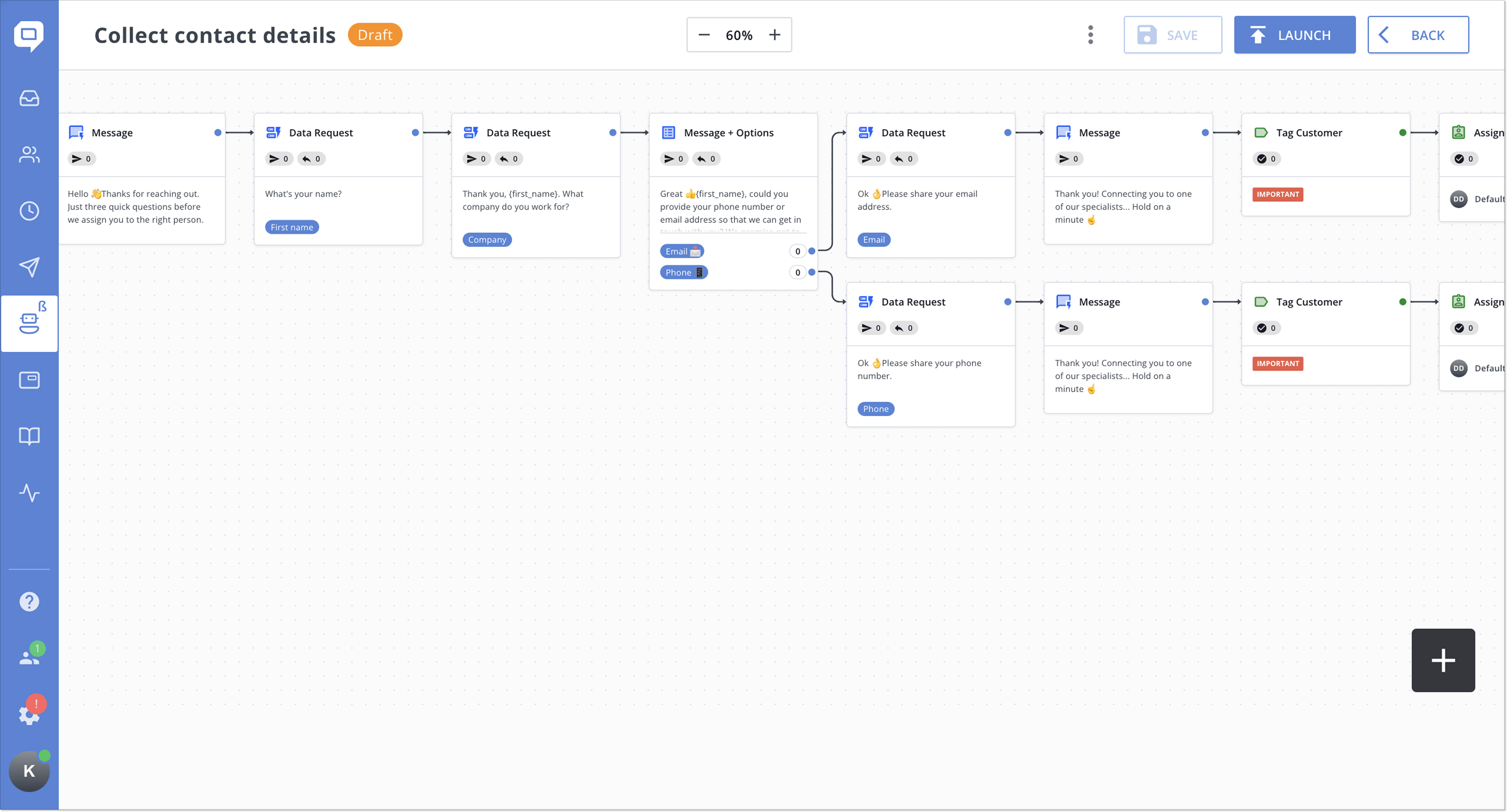
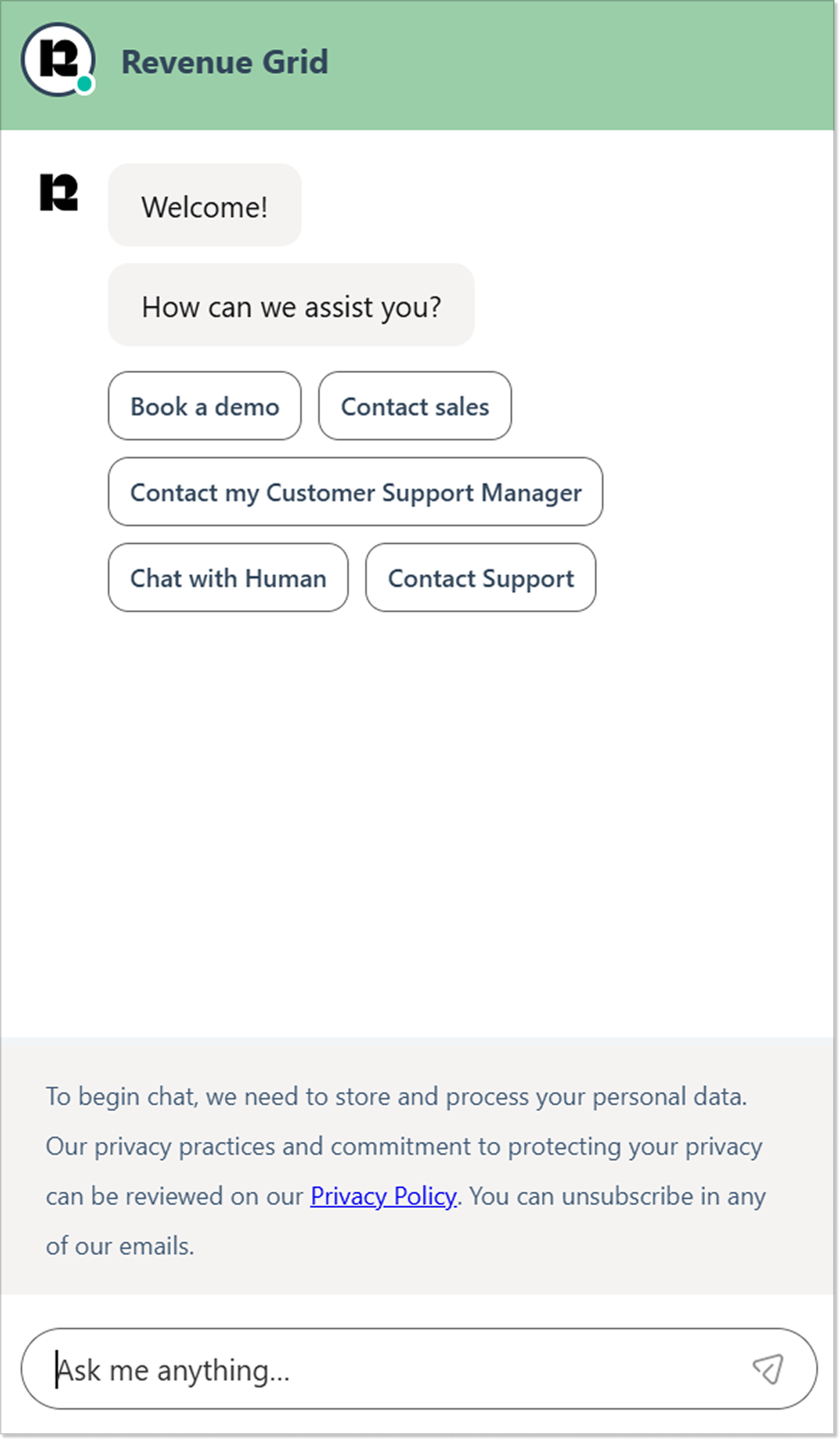
Rule-based bots are also great for lead qualification and data collection. For example, before connecting a visitor to a human agent, the bot can ask a few structured questions like name, company, email, or phone number. Think of it as a polite receptionist who never forgets to ask the basics.
They’re also perfect for automating daily routines for your customer support team, such as routing conversations, tagging users, assigning tickets, or checking basic eligibility.
Conversational AI examples in customer service
Now let’s move to the cases where buttons and predefined options are no longer enough.
Handling nuanced, case-specific questions
Conversational AI is built for situations where there’s no ready-made answer, the context matters, or the customer expects a more personal approach.
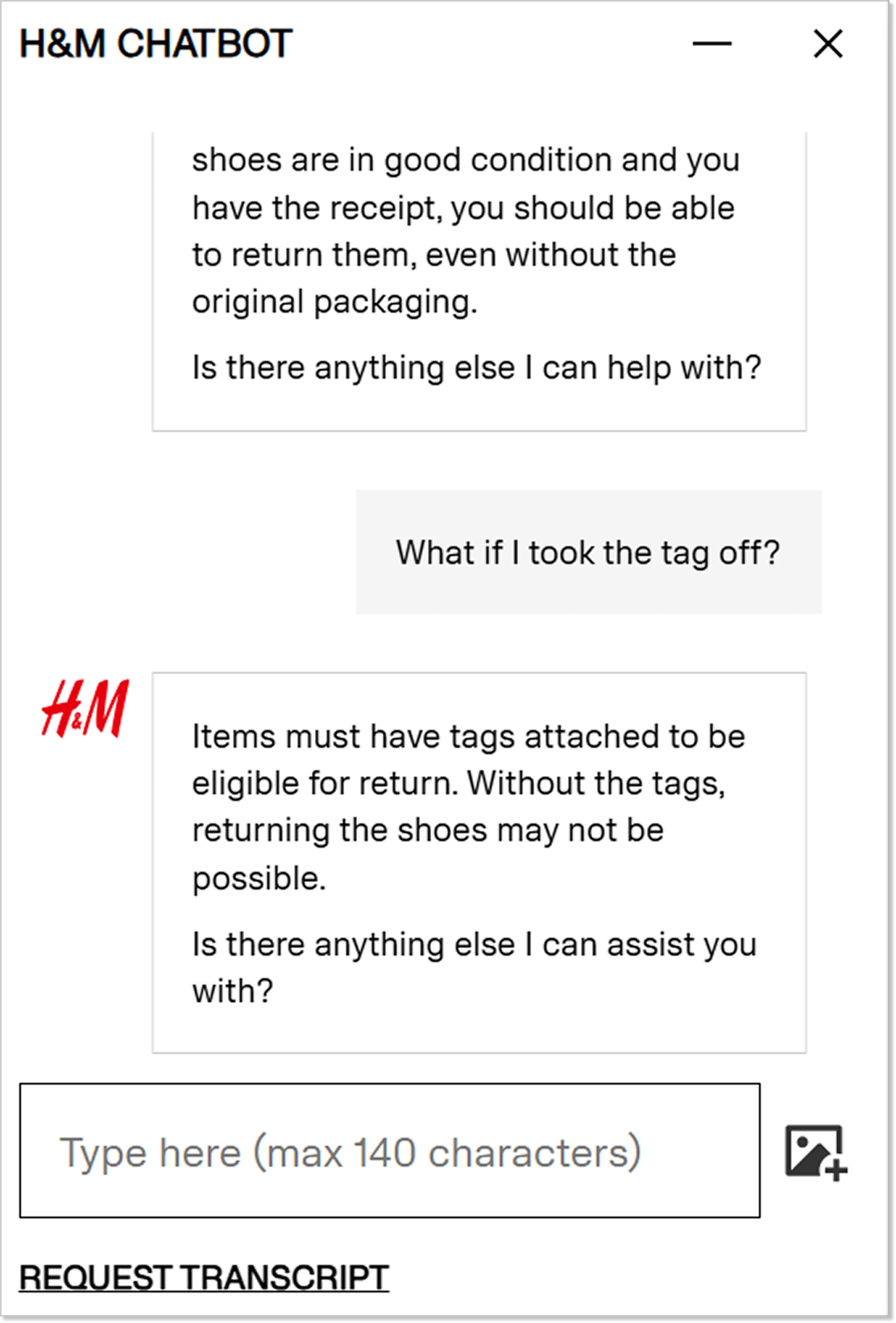
Imagine a customer asking about returning shoes. Not just “What’s your return policy?” but something more specific: the shoes were worn once, the box is missing, and the return window is almost over. That’s what I asked from the H&M customer support bot. A rule-based chatbot would usually point to a general FAQ article and leave me to try and find an answer somewhere there.
On the opposite, conversational AI understands the situation as it’s described and responds with a clear answer right away, even if that answer would be hard to find by clicking through menus or reading policies.
Making sense of natural language requests
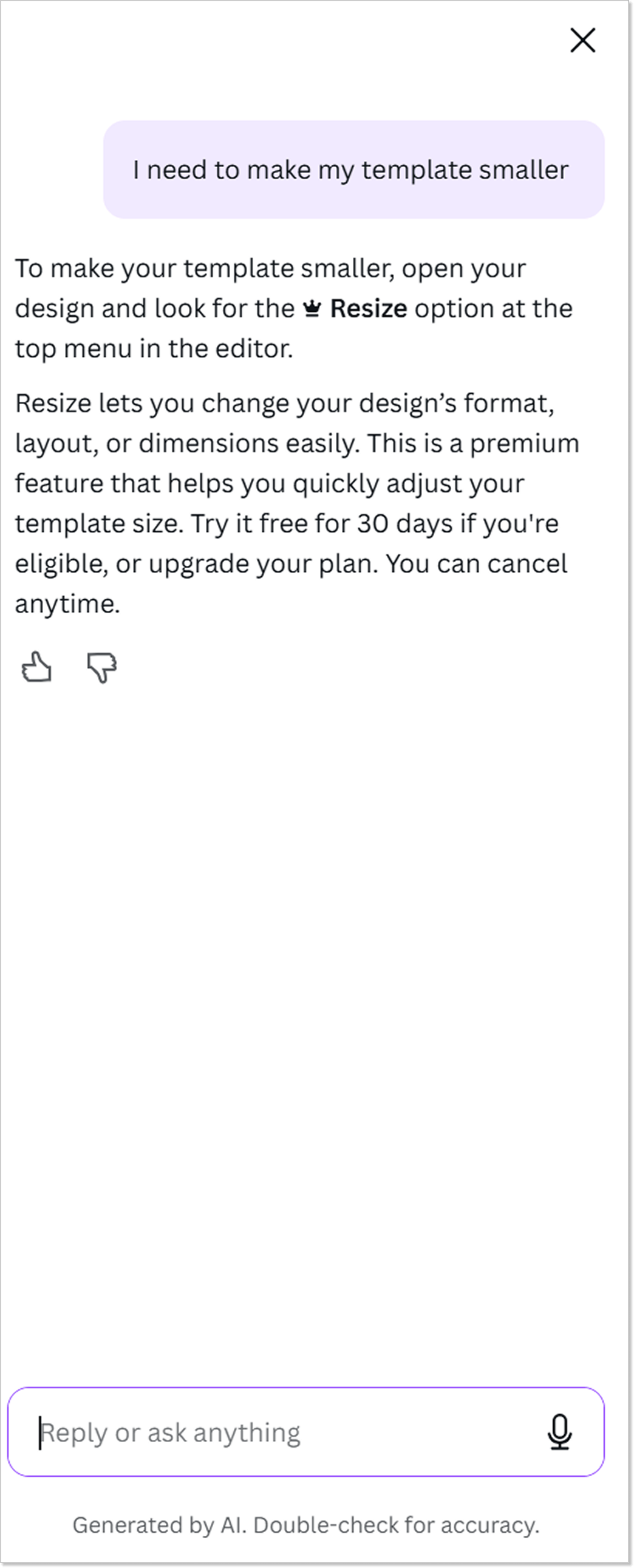
Plus, even if a user doesn’t phrase their request perfectly, conversational AI can still recognize the intent through keywords. A message like “I need to send this back” is understood as a question about the return policy, without the user having to be precise or technical.
Personalized customer support
What’s more, conversational AI is especially useful for a personalized, high-touch customer experience. More elaborate AI bots can remember previous conversations, understand what the customer has already tried, and avoid asking the same questions again. That alone already makes the interaction feel more human.
Smart voice assistance
Remember, I mentioned that conversational AI is not just text; it includes voice-based conversations too. Voice assistants are a common use example, especially in call centers or ordering systems. Customers can describe their issue in their own words, and the system understands what they mean, even if the request is vague or emotional.
This works well for placing orders, checking account details, or getting help without navigating phone menus that feel like a maze. No “press 1, press 2” energy here.
Overall, as you now know, conversational AI comes in a variety of shapes and sizes, so it’s up to you how to implement this undoubtedly useful technology and whether to combine it with a rule-based chatbot.
Bottom line: What is the future of chatbots and conversational AI?
Time to ask the big question: what happens to chatbots and conversational AI in the future? Will AI replace live-chat or chatbot interactions completely? Will AI replace human customer support agents altogether? Oh, that’s a bit scary!
Let’s not get all dramatic here. Rule-based chatbots and conversational AI will both stay in use, simply because they solve different problems.
Rule-based bots are great for quick, predictable tasks like FAQs, basic navigation, or account checks.
Conversational AI steps in when things get messy, unclear, or personal. Together, they create an automated support system that is fast and easy for simple requests, but still flexible enough to handle more complex situations when needed.
And no, human support agents aren’t going anywhere. Their role is just evolving. As Gartner notes, self-service is now a top priority for support leaders, but it only works when knowledge is well managed, which is why many teams are upskilling agents to curate and review content that powers AI-driven support. How about that?
Instead of spending time on repetitive questions, agents are increasingly involved in handling edge cases, sensitive situations, and keeping the knowledge behind self-service accurate and useful.
And that’s exactly why so many businesses implement AI: to take care of routine inquiries, speed up first responses, and free up human support teams for the work that actually needs their attention.